YOUR CART
- No products in the cart.
Subtotal:
$0.00
BEST SELLING PRODUCTS



If I close my eyes and think back to where my story with music really began, I don’t picture a stage first. I picture my mother—pregnant, tired, hopeful—and my dad pressing a speaker playing classical music up against her belly like it was a secret letter written in sound.
I’ve been told I would kick to the rhythm.
Maybe that’s why music has never felt like a hobby to me. It’s always felt like a language I already knew, even before I had words for it.
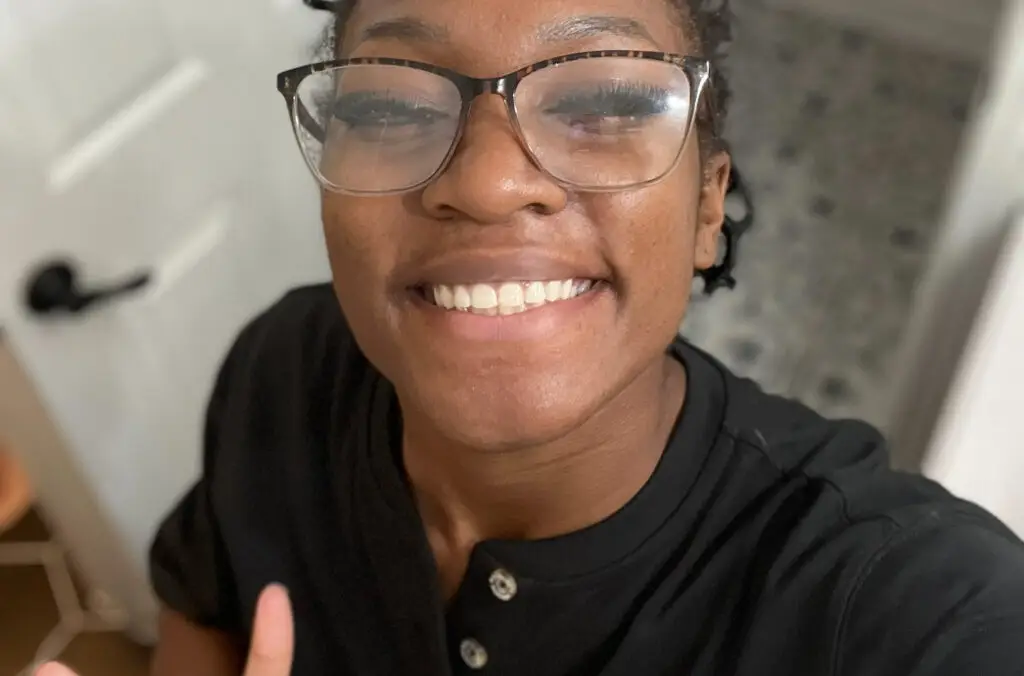
I’m Journie. I’m a 20-year-old singer and songwriter from Houston, Texas. I’m also the oldest of five sisters, and yes—our house is as loud as you’re imagining. I still live at home with my mom, dad, my sisters and our dog Zeus, and if you ever wonder where my songs come from… start there. Life is happening in real time around me, every day, in a house full of girls learning who we are.
I fell in love with performing in first grade.
My school held a talent show, and I decided to perform a song that my dad had written. I didn’t think about “stage presence” or “vocals” or any of the things I think about now. I just knew I wanted to perform, and I wasn’t scared to do it. I remember stepping up like the mic was a friend.
I did so well I received honorable mention. And what made it feel unreal was that I wasn’t just competing with kids in my grade—there were older kids too, all the way up to sixth grade, and honorable mention meant I beat a bunch of those older kids. I didn’t have the words for it back then, but I felt something click into place. Like, Oh… this is mine.
After that, I won every school talent show I entered as a solo singer. Not because I was trying to prove something, but because I couldn’t stop. It wasn’t “extra.” It was natural.
Throughout elementary and middle school, I was always performing in some form.
Sometimes it was the big moments—musical theater, standing under stage lights, learning how to tell a story with my voice. Sometimes it was smaller, but just as important—singing the national anthem before morning announcements, singing at swim meets, saying yes when someone asked, “Can you do it?” even if my stomach fluttered.
Those years taught me something simple: music wasn’t only about being heard. It was about feeling seen.
In eighth grade, my sisters and I moved from Houston to Aurora, Illinois, a suburb of Chicago. My dad stayed behind in Houston until he could find work in Chicago, so for a while it was just my mom holding everything together and me living in a new place at an age where everything already feels unsure.
In Aurora, I started making friends that pulled me in the wrong direction. I experimented with marijuana. It was not good for me. And slowly, I moved away from the version of myself that loved music openly and proudly.
I changed the way I looked to fit in—wigs, fake eyelashes, heavy makeup. I was trying to build an identity from the outside in, because inside I felt shaky. I also had more independence and less supervision with my dad still back in Houston, and I didn’t handle that freedom the way I wish I had.
I didn’t become a “bad kid.” I became a confused kid.
And confusion has a way of lowering your standards without you noticing. You start accepting things you never would’ve accepted before. You start shrinking your passion because it’s easier than standing out.
High school came with a lot. The restrictions and weirdness of the COVID pandemic. The pressure of changing routines. The emotional whiplash of trying to be a teenager in a world that felt unstable.
Eventually my dad moved to Chicago to be with us, but home wasn’t calm. There were turbulent times—arguments with my parents, and my parents arguing with each other. And when you’re young, you don’t always know how to process that kind of tension. You just carry it.
Sometimes you carry it into your friendships.
Sometimes you carry it into your choices.
Sometimes you carry it into your silence.
In 10th grade, our family moved back to Houston. I thought the move would fix things. In some ways it helped, but the drama didn’t disappear, it intensified. We were still a family trying to heal while also trying to function.
Then a house fire forced us to move again. I transferred to a new school. It felt like my life kept getting reset before I could figure out who I was.
I’m telling you this because it matters: sometimes people look at artists and assume the music came from nowhere. But for me, it came from a lot of “start overs.” A lot of nights where I had to hold myself together in private.
My senior year, I got in trouble at school. My punishment was 30 days at an alternative school for students who’d broken the rules.
That’s the moment I can say honestly: I felt like I hit rock bottom.
The alternative school had a strict dress code. Everyone wore the same thing: black polo shirt, khaki pants, black shoes. No fake hair. No fake nails. No fake lashes. No jewelry. No makeup.
At first it felt like a punishment on top of a punishment. Like, Who am I supposed to be if I can’t build myself up the way I’ve been building myself up?
But something surprising happened.
Without all the extras, I started seeing myself again. Not the version I was trying to impress people with. The real one. The one with natural beauty. The one with a voice. The one who used to win talent shows because singing felt like breathing.
I often finished my schoolwork early, which left me time to sit and think. And in that stillness, my love for music came back like it had been waiting patiently for me.
I started listening to instrumentals and writing in my journal—songs that would come to me like thoughts I couldn’t ignore. I’d go home and sing them for my family, and they looked at me like they were seeing me clearly for the first time in a long time.
They told me my songs were excellent.
They told me I had a gift for songwriting, not just singing.
So I kept writing. Every day. And the more I wrote, the more certain I became:
This isn’t just something I like.
This is what I’m supposed to do.
I applied to Berklee College of Music and didn’t get accepted.
That hurt. I won’t lie. When you finally decide to take your calling seriously and the door doesn’t open, it can feel like you misheard God, misread your life, misunderstood yourself.
But I kept going.
I got accepted to the University of North Texas, but I didn’t take the right steps in time to apply to the music program. And instead of panicking or forcing something uncertain, my parents and I made a decision together: I would defer college for a year.
Not to waste time.
To work.
To record and release music.
To build my catalog.
To learn who I am as an artist.
To give my gifts a real chance to grow.
Music is important to me because it gave me my identity back when I lost it.
It reminds me that I don’t have to decorate myself to be worthy.
It reminds me that my voice counts.
It turns pain into something useful.
It turns confusion into something clear.
And my goal isn’t just to “drop songs.” My goal is to spread my music to the world and let it be a roadmap for young girls carving out their identity as they blossom into womanhood—girls who are trying to figure out how to be soft and strong, wise and still learning, feminine and still firm.
If that’s you—if you’ve ever felt like you were becoming someone you didn’t recognize—I want you here. I want you listening. I want you to find yourself in the lyrics the way I found myself in writing them.
Because maybe the best part of being a musician isn’t the studio or the photos or the moment something finally “pops.”
Maybe it’s the connection.
And maybe it’s you
Get early access to my upcoming music
No spam. Just music + first access. Unsubscribe anytime.